Protesting in wartime
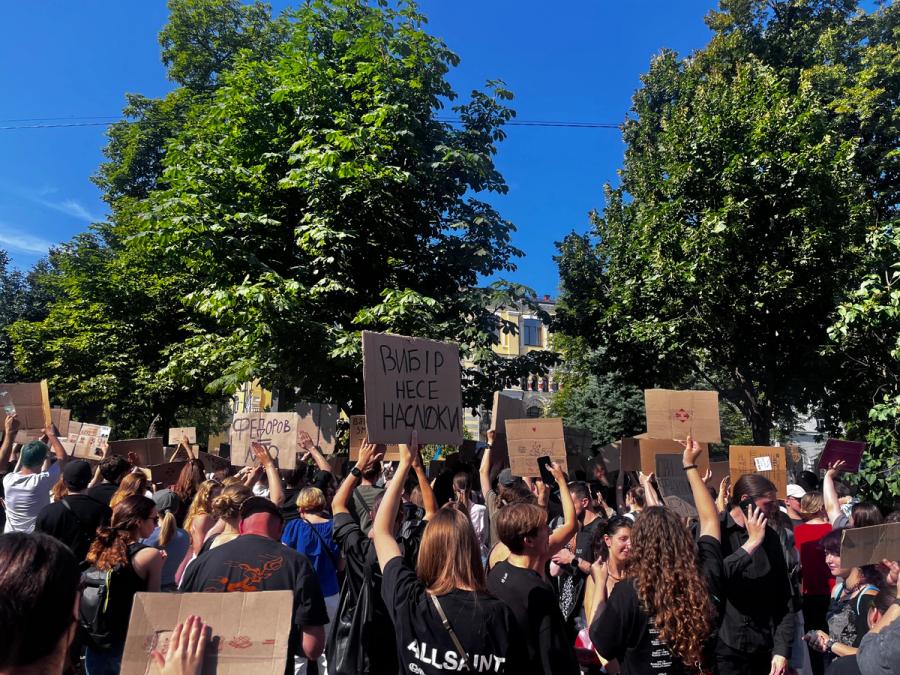
It is often the case that emergencies are used to curtail fundamental freedoms. This is part of the authoritarian playbook around the world. Emergencies (especially if well crafted) arouse the public, overloading its nervous system, shattering its sense of calm and cognitive consonance and inducing a demand for strong measures. It’s basically like craving gummy bears after seeing an ad.
However, in Ukraine, it seems that this playbook has been reversed. Not only has the country managed to maintain a fairly open and free society in wartime (even making important advances due to its desire to join the EU), but its public has understood the necessity of protesting even in wartime: first in 2025, when Zelensky tried to subjugate the independent anti-corruption authorities NABU and SAPO, and then now, after Zelensky dismissed the popular (and effective) minister of defense Fedorov, allegedly due to pressure from the unpopular Commander of the Armed Forces Syrskyi.
(I love Zelensky. He is by all means a hero. But his track record recently is starting to become questionable.)
In both cases, unless many empty movements that we see in the West, protests worked. Last year Zelensky rolled back his legislative changes (also thanks to EU pressure), and this year he has already dismissed Syrskyi.
The victories for democracy have been enourmous. It might be that Zelensky is very sensitive to public opinion (as a TV personality, you get to develop quite a relationship with your audience), but I cannot remember such principled, focused, effective grassroots efforts in our free nations in recent years.
But beyond this obvious positive take, there are a couple of points I’d like you readers to take home.
First, crises either make you or break you. In the case of Ukrainian society (by and large), people chose to be (re)made. Ukraine has a long history of entrenched corruption, but since the first Russian invasion of 2014 started to threaten the existence of the Ukrainian state itself, people realized that they had to wake up and solve the cancerous problems affecting their country.
Second, focusing on last year’s success, we witnessed a rare example of the EU as a unified foreign policy block, exerting its healthy soft power. In 2025, the US stopped funding Ukraine completely, thanks to the new fascist admnistration; this means that the EU has more leverage on Ukrainian institutions. Using this leverage (responsibly) to advance value-based policy objectives is what a responsible superpower in pectore should do.
Due to the devaluization of our societies, whose existence is not threatened, it’s difficult to imagine such protests taking place. People prefer to silently complain by electing fascists. But who knows, maybe some crisis will either make us or break us.
Have thoughts on this post? I would love to hear from you.
Get in Touch